


Biodiversity and Health: an Urgent Issue
The 28th issue of FACTS Reports, produced in partnership with the AXA Fund for Human Progress and Sanofi, examines the profound connections between biodiversity and human health. With the current rate of species extinction estimated to be 10 to 100 times higher than that of the five previous mass extinctions, this issue uses an interdisciplinary approach to explore how the degradation of the natural world is a major determinant of our health and, conversely, how the preservation of biodiversity can become a powerful tool for protecting public health.
To address these challenges, this issue proposes a series of concrete solutions. Leverage points such as agroecology, ecosystem restoration, nature restoration financing, and citizen mobilization are explored to halt the erosion of biodiversity and, in doing so, protect public health. The report revisits the One Health approach, which views human, animal, and environmental health as inseparable.
Explore:
- The introduction, by Julia d'Astorg (Director of the Science & Nature Departments at the AXA Fund for Human Progress), Sandrine Bouttier-Stref (Director of CSR at the Sanofi Group), and Nicolas Renard (Executive Director of the Veolia Institute)
- The Foreword, “Biodiversity and Human Health: A Vital but Underestimated Link,” by Harvey V. Fineberg, Professor Emeritus of Health Policy and Management at the Harvard T.H. Chan School of Public Health and Member of the Veolia Institute’s Foresight Committee
- An analysis: An interview with Harvey V. Fineberg on the global dynamics that are redefining the links between biodiversity and health
- A Conclusion, by Cédric Baecher, Partner at Wavestone.
1. Biodiversity and Health: a Vital Alliance
Achim Steiner, former Director of the United Nations Environment Programme, describes our relationship to the living world in these terms: “Across cultures, humans inherently value nature. The magic of seeing fireflies flickering long into the night is immense. We draw energy and nutrients from nature. We find sources of food, medicine, livelihoods, and innovation in nature. Our well-being fundamentally depends on nature.”
Over and above the beauty of the natural world that enchants us and the diversity of species that fascinates us, it is important that we acknowledge more explicitly our structural dependency on biodiversity: it is a necessary condition for our existence, to the extent that preserving our societies is inextricably tied to preserving the living world.
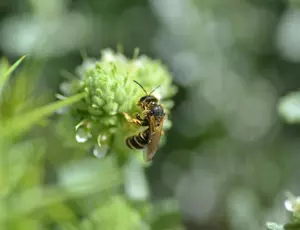
Independent researcher and expert in agroecology
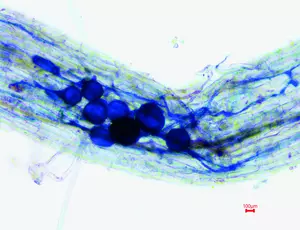
Scientific Lead, Mycology Research Laboratory, Centre for Business, Arts and Sciences, Lethbridge Polytechnic, Alberta, Canada
Dale Pulvermacher
Research Assistant / Student Technician, Mycology Research Laboratory, Centre for Business, Arts and Sciences, Lethbridge Polytechnic, Alberta, Canada
Professor emeritus at the Pasteur Institute and Collège de France
Professor of nephrology at the Karolinska Institutet in Stockholm
2. The Health Costs of Biodiversity Loss
The Strategic Plan for Biological Diversity 2011-2020 and Aichi Biodiversity Targets formulated in 2010 by the Convention on Biological Diversity were intended to lay the groundwork for international action to protect ecosystems vital to human health. The failure of these targets, particularly target 14 on restoring and protecting ecosystems that contribute to health, access to water and well-being, underscores our collective inability to stem the decline of these fundamental ecological services. Continuing along the same trajectory leads to on-going reductions in the ability of ecosystems to provide these services, with disproportionate impacts on economically disadvantaged and vulnerable groups, confirming that biodiversity loss is a major structural determinant for human health, over and above the environmental issues it raises.
Associate Professor of applied environmental geology at the University of Turku, Finland

Professor of Microbiology at the University of Limoges and Head of the Bacteriology, Virology and Hygiene Department at Limoges Teaching Hospital
Chemical oceanographer working for the CNRS at the Mediterranean Institute of Oceanography, Aix-Marseille-University
Research officer at the Research Institute for Development (IRD)
Franck Courchamp
Ecologist and research director at the National Center for Scientific Research (CNRS)
AXA Research Chair in Applied Pathogen Ecology, University College Cork, Republic of Ireland
Research fellow at the HUN-REN Centre for Ecological Research, Vácrátót and at the Institute of Metagenomics, University of Debrecen, in Hungary
3. Solutions for Preserving Biodiversity and Protecting Health
The unbreakable ties between ecosystem stability and human health mean that simply noting the damage is not enough: we need to take action to restore the living world. Preserving biodiversity requires coordinated action at every level underpinned by growing public awareness. In France, mobilization against the proposed Duplomb Act, which sought to overturn the ban on acetamiprid, a pesticide banned in France since 2018, showed that there is now a better understanding of the risks that harming
pollinator populations poses to human health and food security, revealing a shift in the public debate surrounding biodiversity and the degree to which humanity depends on it.
Head of Public Affairs for the Tara Ocean Foundation
Pierre Mienville
Advocacy Officer for the Tara Ocean Foundation
Executive Vice President Strategy & Multifaceted Performance - Member of the Executive Committee at Veolia
Jean-Pierre Maugendre
Deputy Director of Sustainable Development and Multifaceted Performance at Veolia
Tiphaine Déas
Head of Biodiversity Initiatives within the Nature Pole of the Sustainable Development and Multifaceted Performance Department
Research director at the French National Research Institute for Sustainable Development (IRD)
Audrey Arnal
Associate researcher at the French National Research Institute for Sustainable Development (IRD) and at UMR UM/CNRS/IRD MIVEGEC, Montpellier, France

Professor at the Globe Institute of the University of Copenhagen
Chief Technology Officer, APOLO Biotech
Soledad Traubenik
APOLO Biotech Europe Country Manager, APOLO Biotech France
Federico Ariel
Co-founder & Chief Science Officer, APOLO Biotech
CEO at WWF France
Researcher in water and environmental governance at the Vrije Universiteit Brussel (VUB) Department of Water and Climate
Head of Sustainable Underwriting at AXA Group